
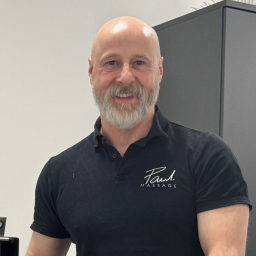
When someone asks me for a “proper deep tissue massage,” I know exactly what they mean. They’ve had sessions elsewhere where the pressure skimmed the surface or felt busy but didn’t really get to the point. What they’re looking for is effective, steady work that eases the stubborn bits and leaves them moving more freely—without being battered in the process.
The common situation
Many people come to me after a run of disappointing massages. They’re told it’s deep tissue, but the pressure stays light, or the therapist rushes around without settling into the areas that actually need time. It’s understandable to feel cautious after that. You want to trust that the session will be strong enough to help, but also respectful of your limits. My job is to bridge that gap—effective pressure, clear communication, and a calm pace.
What clients often say or experience
Across reviews and conversations, a pattern stands out. People mention that the pressure is genuinely strong yet measured. They notice that specific problem areas—often the neck, lower back, or hips—are worked with care rather than just passed over. Some feel calmer and more energised after, rather than dazed. Travellers tell me their post-flight stiffness eases. Others say a nagging back issue finally feels under control. The common thread is relief that the massage did the real work without tipping into pain for the sake of it.
Therapist insight
Deep isn’t the same as hard
Deep tissue is about depth, not force. I work slowly, layer by layer, allowing the body to let me in. Rushing or “attacking” tends to make muscles guard. Going steady, using breath and gradual pressure, means we can reach the deeper structures more comfortably and effectively.
Focus beats fuss
Real problem solving means spending time where your body needs it. If your shoulders and mid‑back are the main issue from desk work or gym sessions, that’s where we concentrate. I won’t waste minutes on areas that are already fine if another region is asking for attention.
The nervous system matters
Stronger work lands best when the nervous system stays settled. I often blend firmer techniques with my calmer Harmonoflow™ rhythm—slower, connected strokes that keep you relaxed while I sink deeper. This is how we achieve that “worked yet rested” feeling people describe.
What this means if you’re considering massage
If you’re booking a Deep Tissue Massage for the first time, expect a collaborative approach. I’ll ask what’s been bothering you, assess how tissues respond, and check in about pressure. Some people like the “good ache” that feels productive; others prefer firm but comfortable. Both are valid. You don’t need to brace or push through pain to get results. We can make meaningful changes at a pace that suits you.
Real‑world snapshots from the treatment room
In practice, this looks like easing out the kinks after a long flight, so your shoulders stop creeping up to your ears. It looks like taking time with a tight hip that’s been bothering you on runs, or settling into the upper back until that heavy, stuck feeling lifts. Clients often leave describing a mix of calm and alertness, along with that satisfying sense that the stubborn areas actually shifted.
Practical guidance
Choosing pressure
- Use a simple 1–10 scale. I aim for 6–8 if you want stronger work; 4–6 if you prefer steady but comfortable.
- Productive deep tissue should feel like relief or a focused ache, not sharp or breath‑holding pain. Tell me if it’s too much.
Before your session
- Have a light snack and some water. Arriving well‑hydrated helps tissues respond.
- If I’m visiting for Mobile Massage, clear a small space (about 2m x 3m) and have two large towels ready. I bring everything else.
During the session
- We’ll agree on priorities: back, neck, hips, or specific areas that need attention.
- Expect a calm pace with fewer, more deliberate techniques—quality over quantity.
Aftercare and recovery
- Some soreness is normal after deeper work, especially if it’s been a while. It usually eases within a day or two.
- Gentle movement, a warm shower, and regular hydration help your body settle into the changes.
- If an issue has built up over months, a short series of sessions often works best. We’ll space them sensibly and see how you respond.
Where and how I work
I offer Massage Therapy both at home and in clinic. If you’re local to Slough, Windsor, Maidenhead and nearby areas within roughly 10 km of Slough, Mobile Massage can be a practical way to get effective treatment without travel. For those who prefer a clinic setting, I’m based at Langley Leisure Centre in Slough. Some clients who work in West London—Ealing, Chiswick, or Richmond—book clinic appointments when it fits their schedule. Either way, the approach is the same: steady, focused work at your pace.
Closing thoughts
A “proper deep tissue massage” isn’t about being tough; it’s about being precise, patient and respectful of how your body responds. Over time, many clients choose to make it part of their routine—less firefighting, more maintenance, and a more comfortable body for everyday life.
If you’re looking for At‑Home Relaxation without the faff of travel, a Mobile Massage can be a straightforward way to start. To book deep tissue massage in Slough or nearby—Windsor, Maidenhead and surrounding areas—head to the booking page and choose a time that suits you. And if you’re unsure what you need, just send a message. We’ll keep it simple and take it step by step.
0 comments